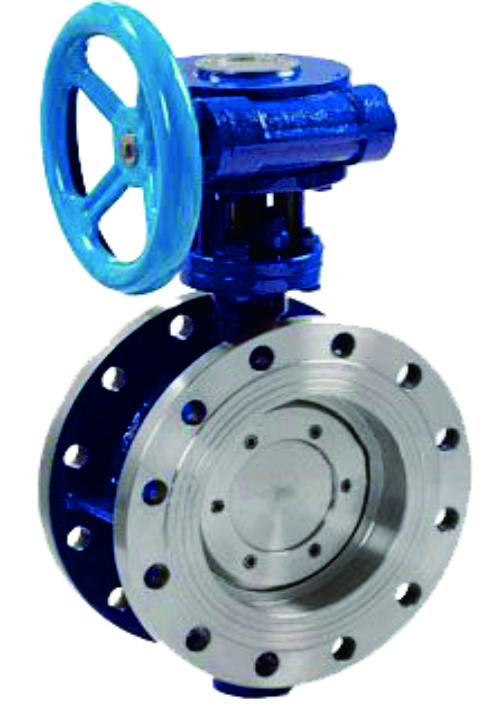
Nickel butterfly valves Manufacturers mainly make nickel butterfly valves from nickel or nickel – based alloys. These valves use a disc – shaped butterfly plate as the opening – closing component. The plate rotates around its own axis in the valve body to open, close, or regulate the valve. Usually, they adopt a worm – gear reducer to endow the butterfly plate with self – locking ability, enabling it to stop at any position and thus improving the operation performance. These valves have various structural forms, like the triple – eccentric type, and connection methods such as wafer – type, flange – type, and butt – weld., etc.
-
Advantages of Butterfly Valve Structural Design Principles
-
Advantages of Nickel Butterfly Valves
-
About Nickel butterfly valves
-
Advantages of Butterfly Valve Structural Design Principles
Advantages of Nickel Butterfly Valves
Strong Corrosion Resistance:
- Nickel and nickel-based alloys exhibit excellent corrosion resistance. Their surfaces can form a stable “passive oxide film,” which effectively resists various corrosive media such as high-temperature concentrated alkali, sulfuric acid, hydrochloric acid, and phosphoric acid. This film prevents the valves from corrosion and damage, thus prolonging their service life.
Excellent Sealing Performance:
- Manufacturers adopt designs like the triple-eccentric sealing structure. This design ensures minimal wear between the valve seat and butterfly plate while providing an automatic sealing function that tightens further when closed. The sealing surfaces offer compensation, achieving zero leakage.
Reasonable Structural Design:
- Engineers design large-size butterfly plates with a truss structure, enhancing strength while creating a large flow-through area and low flow resistance. Additionally, these valves feature bidirectional sealing, allowing installation in any direction regardless of the medium flow or spatial position. Users can also mount the driving device in multiple positions for convenience.
Easy and Light Operation:
- Nickel butterfly valves are compact and lightweight. With components like worm-gear reducers, they become even easier to operate, simplifying installation and maintenance processes.
Materials Science Fundamentals
Nickel-based alloys blend nickel’s chemical stability with strengthening elements.
Monel (Ni-Cu) resists hydrofluoric acid and seawater corrosion effectively.
Inconel (Ni-Cr-Mo) withstands high-temperature sulfuric acid and oxidizing media.
Solid solution and precipitation strengthening boost tensile strength to 650-1000MPa.
With elongations over 30%, these alloys meet high-pressure mechanical requirements.
Structural Design Principles
The triple-eccentric structure (offset stem, disc center, tapered seal) is key.
Closing shifts from line to surface contact, achieving zero leakage (ANSI VI) with elastomeric seats.
Large discs use truss-like hollows, cutting weight, maintaining rigidity, and boosting Cv by 30%.
Manufacturing Process Systems
Production includes vacuum induction melting for uniform composition.
Precision casting (CT4 grade accuracy) and 5-axis CNC machining (Ra≤0.8μm) ensure precision.
Surface treatments like electroless Ni-P plating enhance wear resistance.
Factory tests: helium leak detection (≤1×10⁻⁶ Pa·m³/s) and 100,000-cycle pressure testing.
Industry Standard Compliance
Products adhere to norms like ASME B16.34 (US), EN 593 (Europe), and GB/T 12238 (China). Nuclear applications require RCC-M certification, while food-grade valves comply with FDA standards.
Technological Evolution
Advancements in materials science introduce nanocrystalline nickel alloys and gradient composite coatings, boosting erosion and cavitation resistance. Intelligent integration—embedding pressure sensors and IoT modules—enables real-time seal failure warnings and remote maintenance, transforming nickel butterfly valves from mechanical components into smart fluid control units.